 Ancient
Olympia is located 19 kilometres far from Pyrgos. Ancient Greeks chose
for the place of worship of God Zeus and the home of the Olympic Games,
a location of great natural beauty, under the hill Kronios
Ancient
Olympia is located 19 kilometres far from Pyrgos. Ancient Greeks chose
for the place of worship of God Zeus and the home of the Olympic Games,
a location of great natural beauty, under the hill Kronios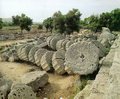 at the point where the rivers Alpheios and Kladeos meet.
The Games begun at 776 B.C. Since
then they became the main event of Ancient Greece. With the Olympic truce
fights stopped during the games, while counting of years was done on a
Olympiad basis. Byzantine Emperor Theodossios put an end to the games,
since the games have started to deteriorate.
After the liberation of Greece from the Turks, at 1829, excavations begun by French archaeologists. Since the finds were transferred to the museum of Louvre, Greek government put an end to these excavations. Newer excavations begun at 1875, revealing many finds and partially, they are still in progress.
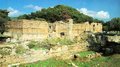
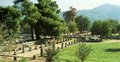 Today
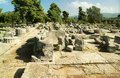
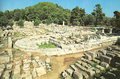
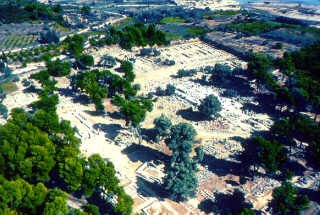
this area is one of the most important archaeological sites of the whole
world. Here you can see ruins from the huge Temple of Zeus, where stood
the magnificent gold and ivory (chryselephantine) statue of Zeus, one of
the seven wonders of the ancient world, the Heraion (temple of Hera), The
Bouleuterion, where the athletes were sworn in before the games, the Philippeion,
the Leonidaion, which was used as a guest house for important visitors,
the Palaestra, that was used for the practice of wrestling, boxing and
jumping, the Gymnasium where the athletes practised other events, the Prytaneion
that housed the officials,
Today
this area is one of the most important archaeological sites of the whole
world. Here you can see ruins from the huge Temple of Zeus, where stood
the magnificent gold and ivory (chryselephantine) statue of Zeus, one of
the seven wonders of the ancient world, the Heraion (temple of Hera), The
Bouleuterion, where the athletes were sworn in before the games, the Philippeion,
the Leonidaion, which was used as a guest house for important visitors,
the Palaestra, that was used for the practice of wrestling, boxing and
jumping, the Gymnasium where the athletes practised other events, the Prytaneion
that housed the officials,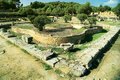
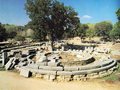 the workshop of Pheidias, the Treasuries of the participating cities and
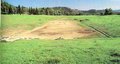
of course the ancient Stadium, with a length of 212,45 metres that held
45.000 spectators.
the workshop of Pheidias, the Treasuries of the participating cities and
of course the ancient Stadium, with a length of 212,45 metres that held
45.000 spectators.
At the archaeological museum of
Olympia there are important finds, like Praxiteles' marble statue of Hermes,
the Victory by Paionios, the sculptures from the pediments and metopes
of the Temple of Zeus, 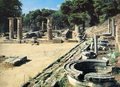 the stone head of Hera, Miltiades' helmet, the terra cotta group of Zeus
carrying Ganymede and also pottery, terra cotta and bronze figurines, votive
offerings from the sanctuary, etc.
the stone head of Hera, Miltiades' helmet, the terra cotta group of Zeus
carrying Ganymede and also pottery, terra cotta and bronze figurines, votive
offerings from the sanctuary, etc.
At the modern city of Ancient Olympia, 1 kilometre far from the Archaeological site, you can see the Museum of the Olympic Games, the only one of its kind in the world. It contains mementoes from all modern Olympiads, while at the side of Kronio hill are the installations of the International Olympic Committee, with the monument of the French founder of the modern Games, Pier De Coubertin.